
October 11, 2026 ~ Kyoto, Japan
Tim was still walking a little gingerly and doing some serious uphill hiking did not sound like a good idea for him. Since the site we originally planned on seeing this morning was not ideal, yet offered up some magnificent scenery opportunities, we decided to split up with plans to meet up afterwards for lunch.
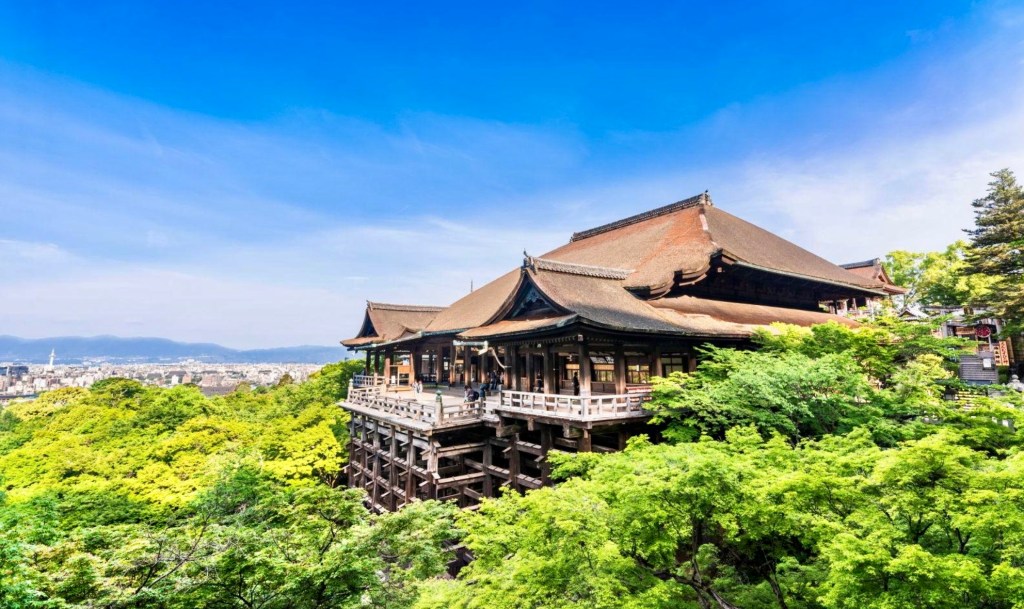
Jan and Mark headed towards Kiyomizu-dera Temple, a UNESCO World Heritage Site. It is one of Kyoto’s most famous temples, with its enormous wooden terrace overlooking the city. The temple was founded in 778, but the present main hall dates to 1663
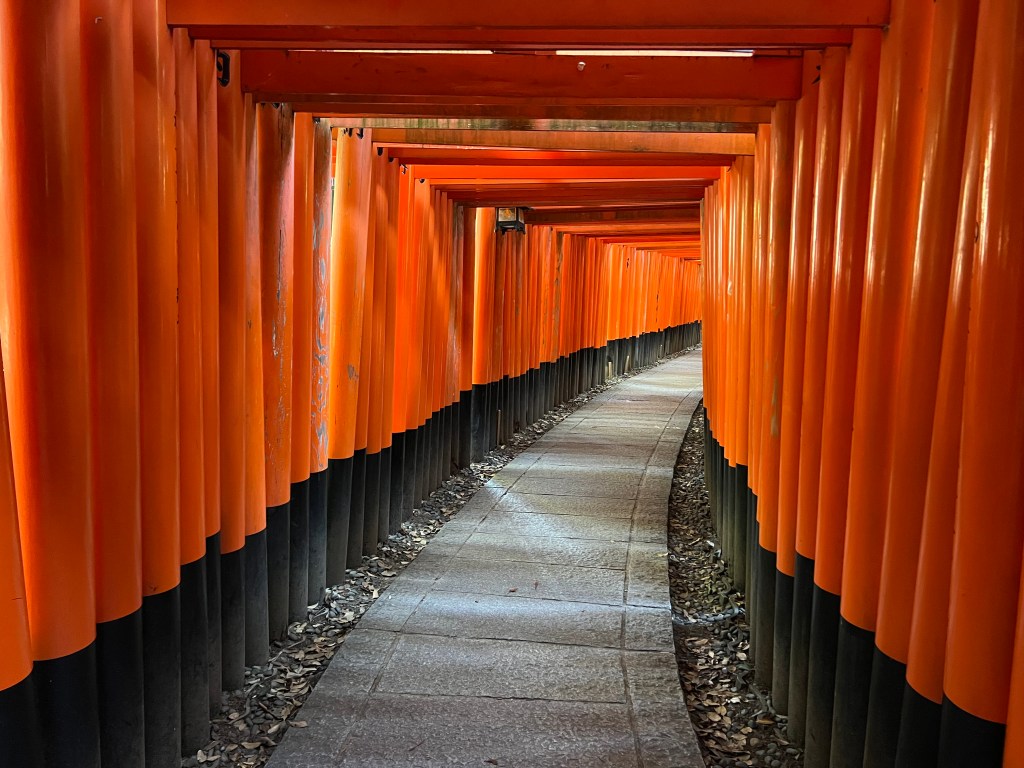
In the meantime, Tim and I headed for Fushimi Inari and their famous red torii gates. This site is best known for its thousands of brilliant vermilion torii gates that form winding tunnels up sacred Mount Inari.
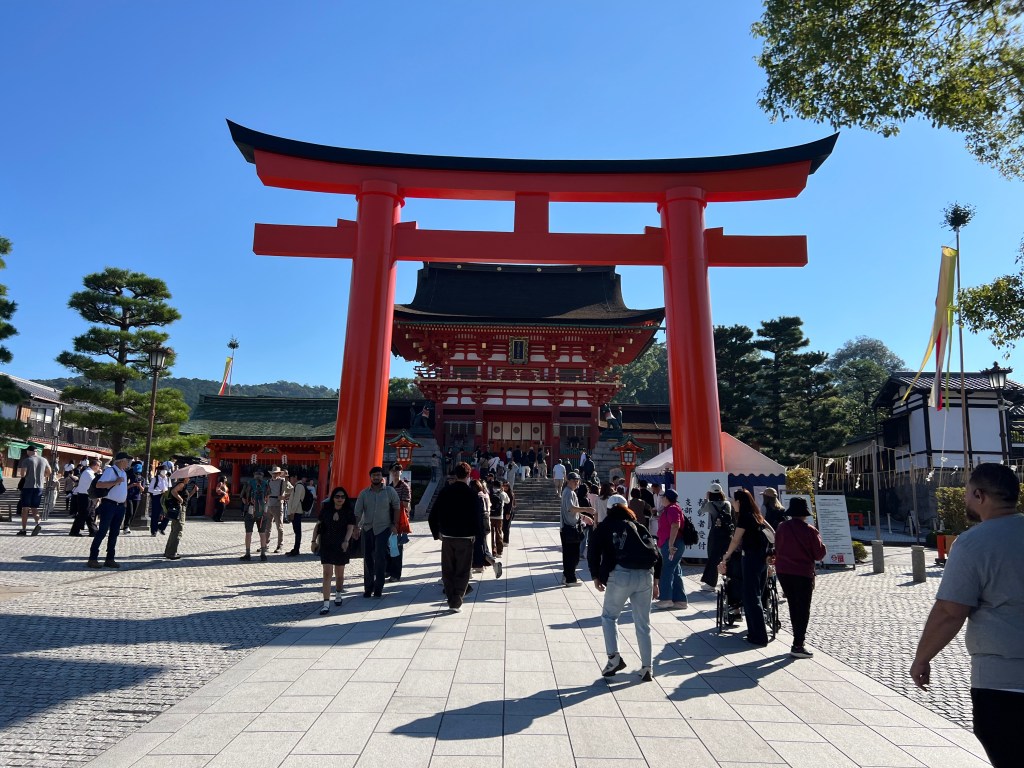
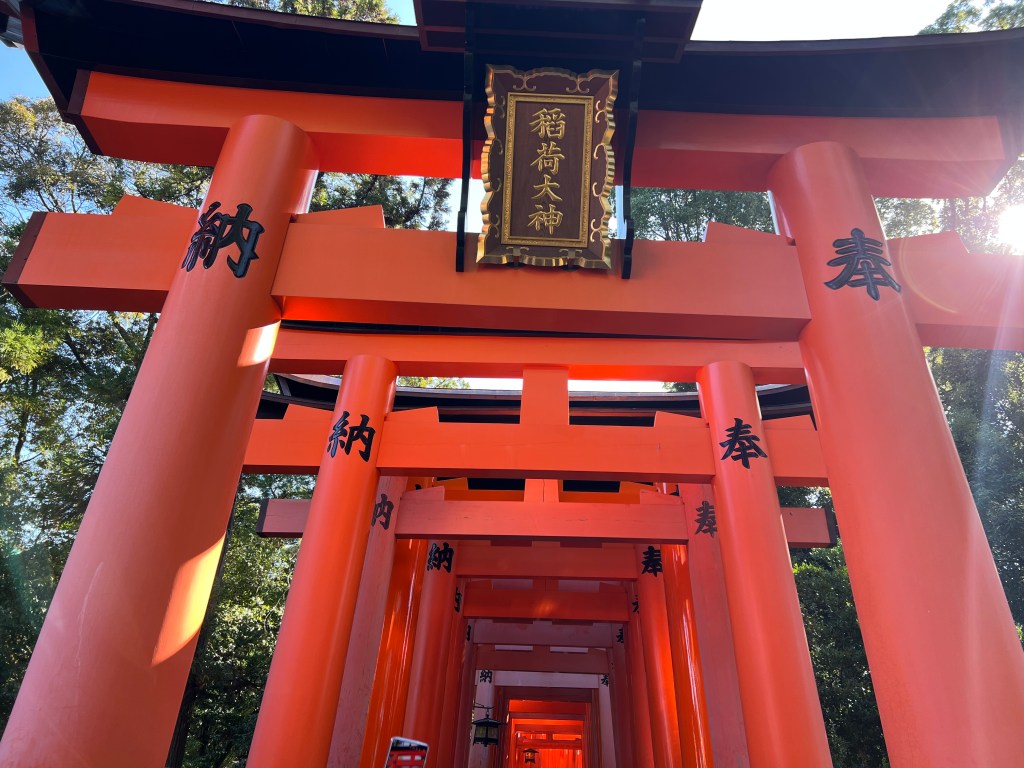
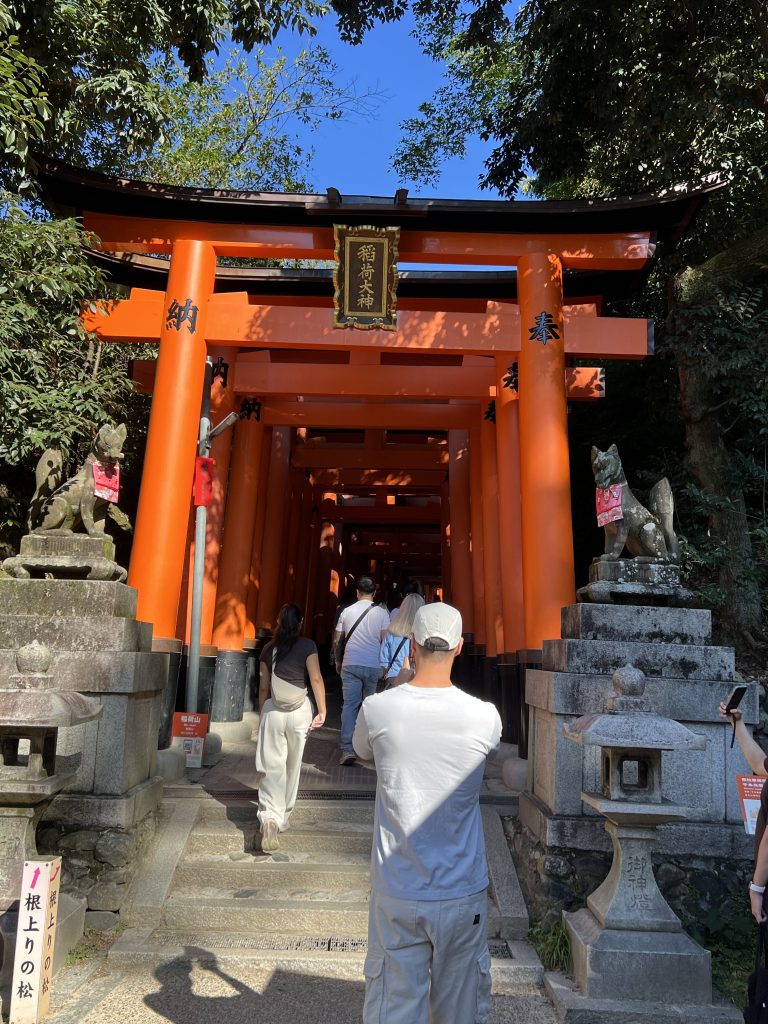
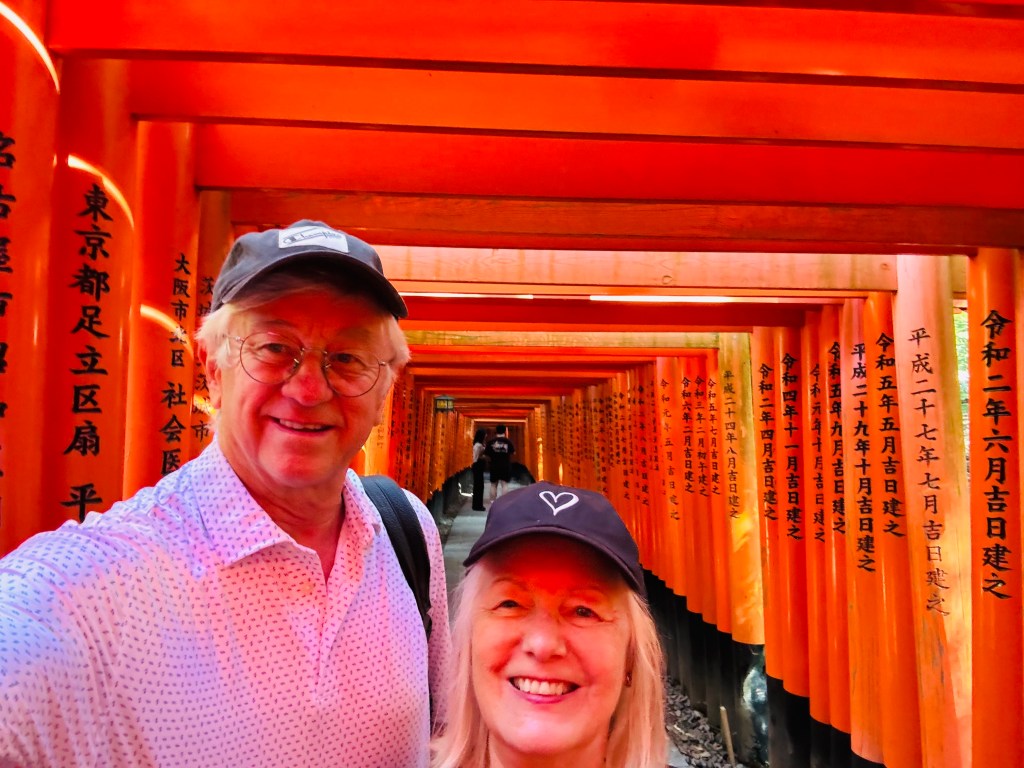
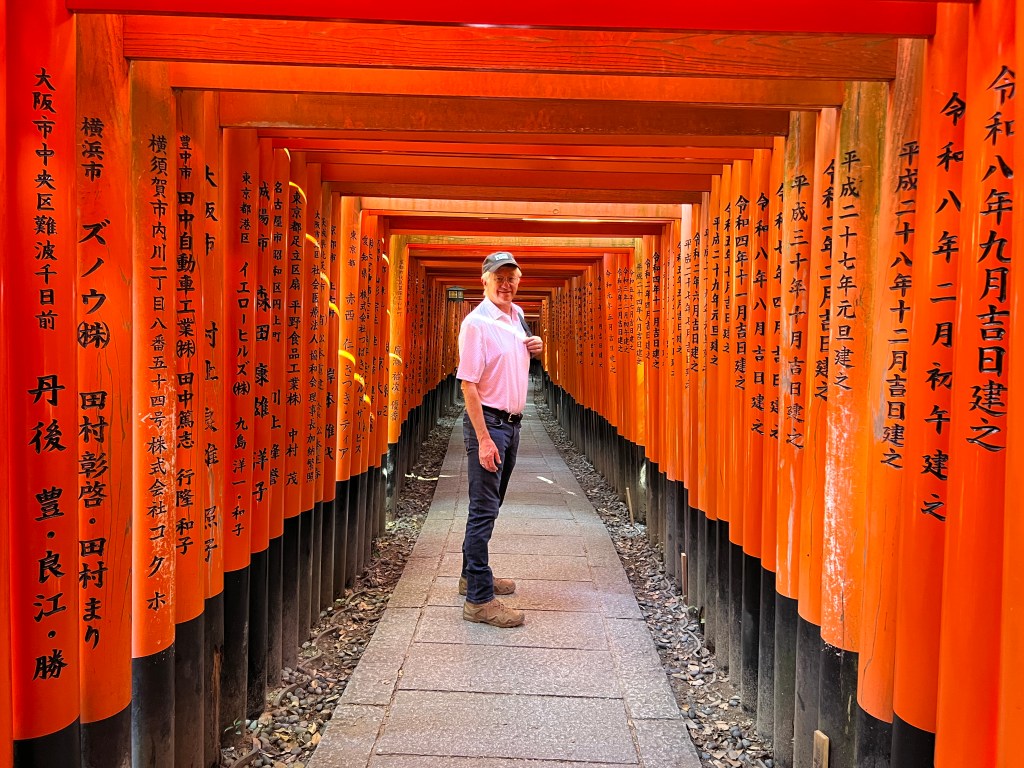
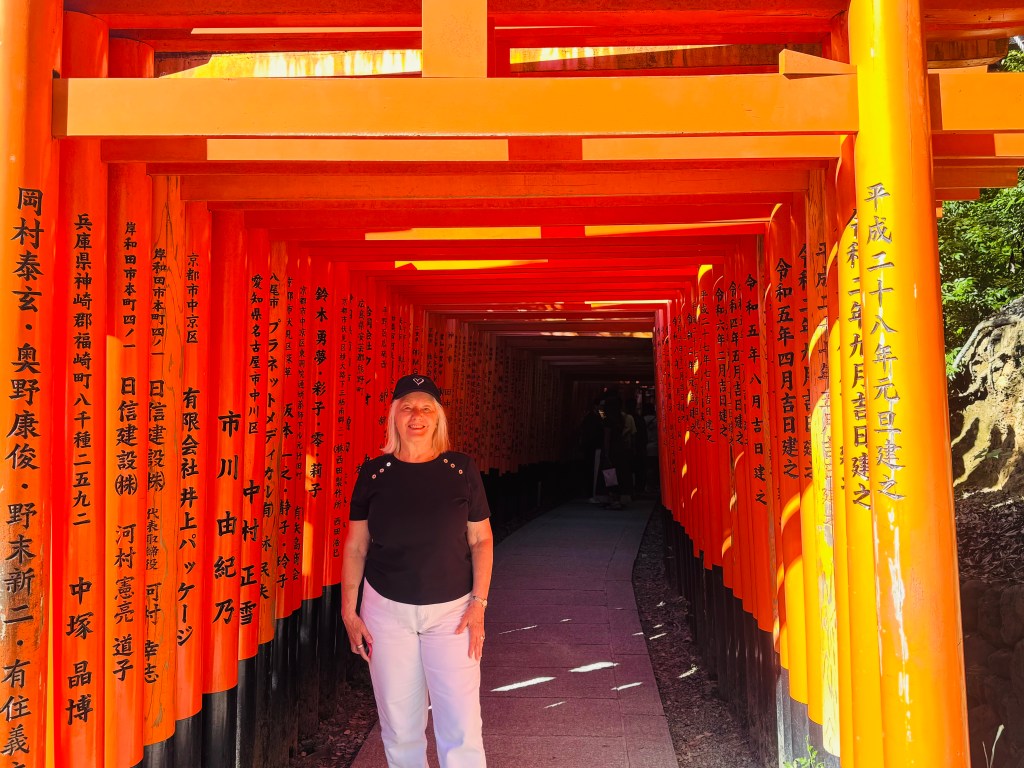
Interestingly, most of the torii gates have been donated by individuals and businesses as expressions of gratitude or prayers for good fortune. One side of the torii is plain, and the other side has the name of the donor written in black.
Here are some fun facts about this unique place:
1. More than 10,000 torii gates!
The shrine is famous for its seemingly endless tunnels of vermilion gates. Estimates vary, but there are roughly 10,000 torii gates scattered along the mountain paths. The most famous section, called Senbon Torii (Thousand Torii Gates), features two parallel tunnels of closely spaced gates.
2. The gates have a price tag!
Individuals and businesses can donate a torii gate to express gratitude or seek good fortune. A smaller gate can cost around ¥200,000 (approximately $1,300), while the largest can cost well over ¥1 million. The donor’s name and donation date are inscribed on the back.
3. Why are the gates orange-red?
The distinctive vermilion color is traditionally associated with protection against evil and misfortune. The pigment has also historically helped preserve wooden structures.
And why are there fox statues in abundance? The foxes at Fushimi Inari aren’t merely decorative statues. They symbolize the sacred messengers of Inari, standing watch over the shrine and representing protection, prosperity, and good fortune.
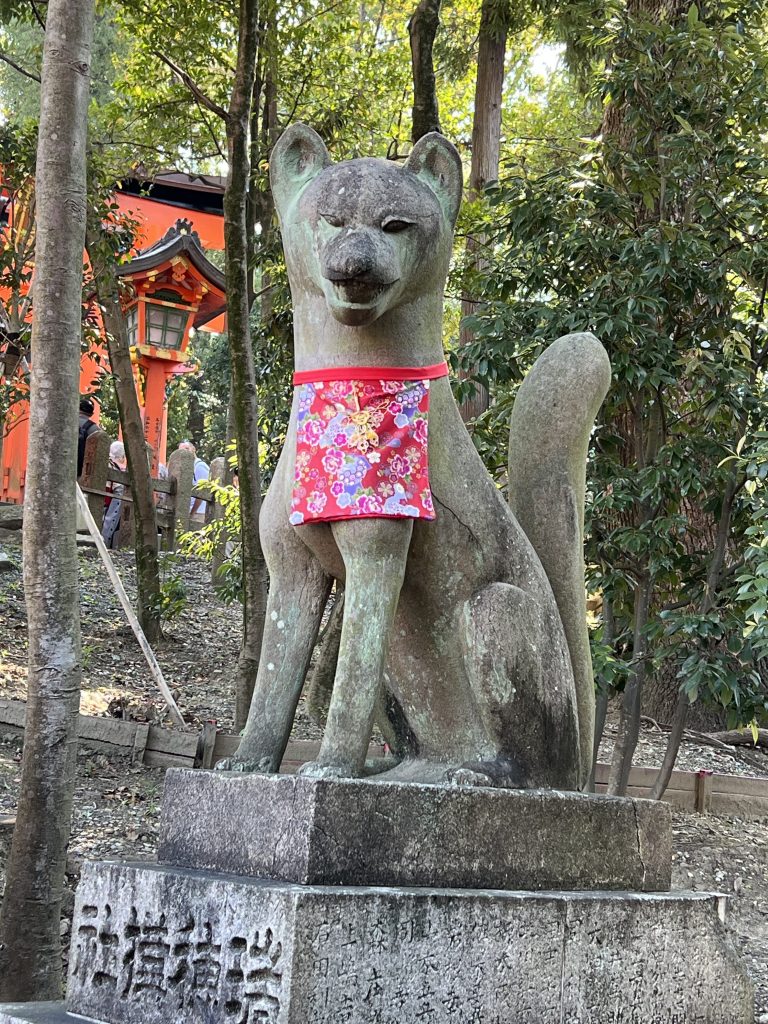
One final item worth noting, especially if you are going to be staying in Kyoto and have a free evening. Fushimi Inari is open 24 hours a day, so visitors can experience the gates illuminated by lanterns after dark—a completely different atmosphere from the busy daytime crowds.
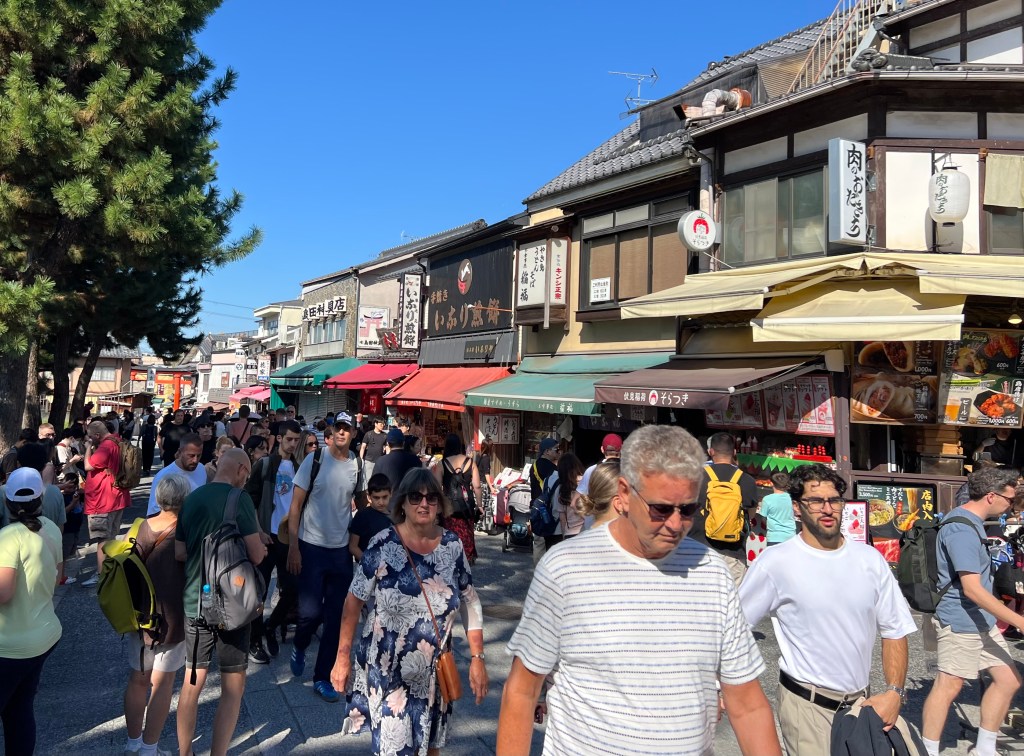
We worked our way back through the crowd and rejoined Jan and Mark for lunch and to spend the rest of the day together in the older section of Kyoto.
Gion Historic District – Gion is Kyoto’s famous traditional entertainment district, known for its preserved wooden buildings, teahouses, and geiko (Kyoto’s geisha).
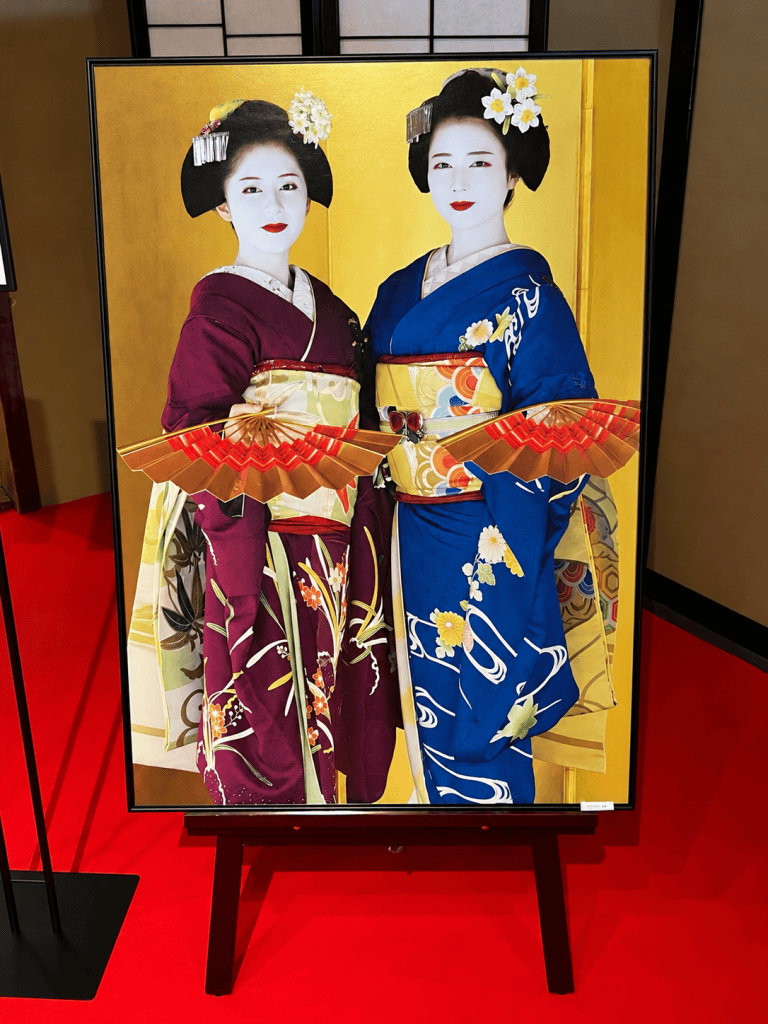
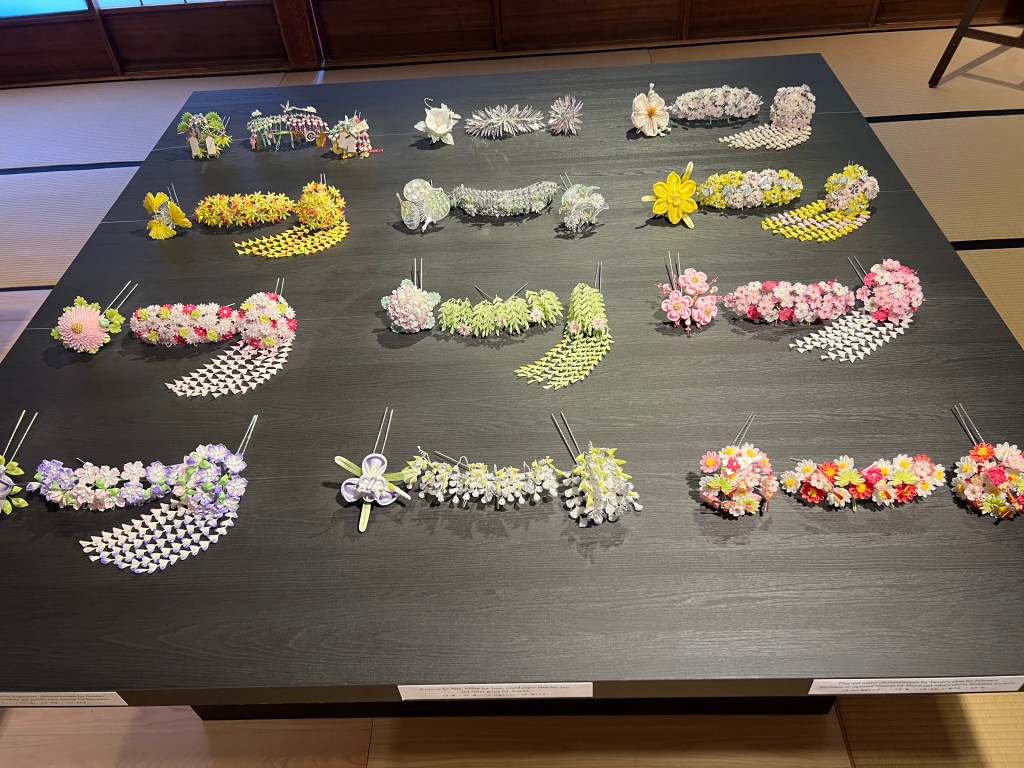
We started our exploration along Hanamikoji Street where we spotted posters that led us to the Gion Kagai Art Museum. We soon learned that “In the Kagai districts of Kyoto, women who perform traditional dance and music in ozashiki banquet rooms and on stage and entertain guests are referred to as geiko (and not geisha). Women training to become geiko are called maiko.
This museum is the only place in the world where visitors can discover the sophisticated culture of geiko and maiko.
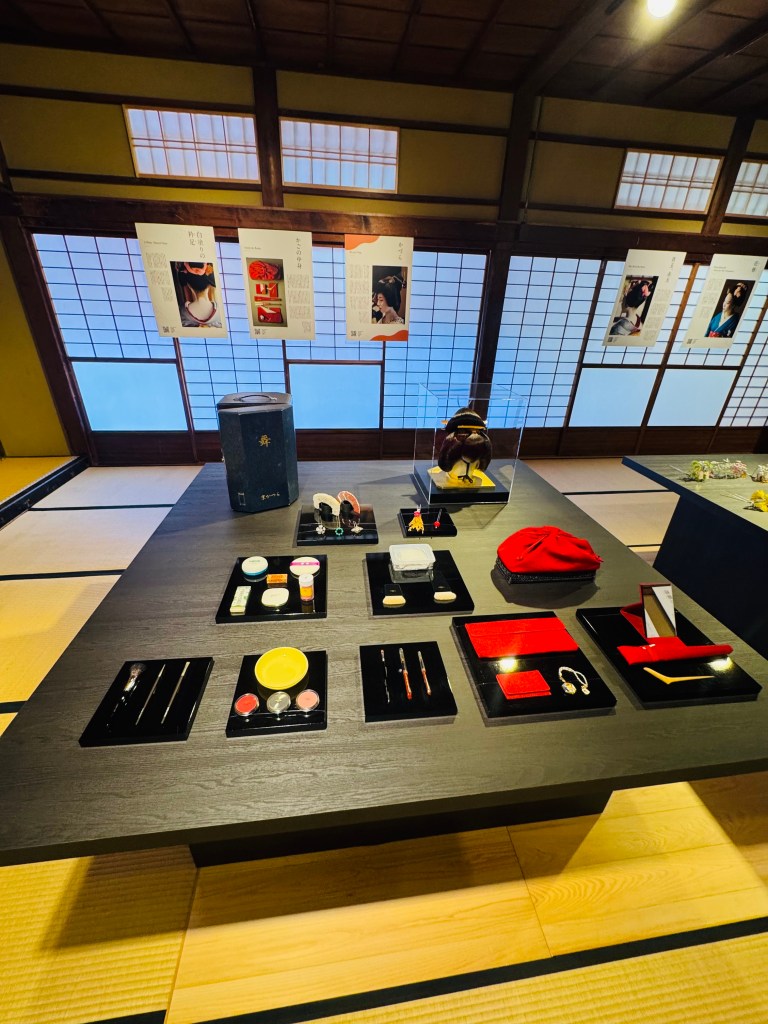
Our timing was perfect for us to attend a short afternoon dance performance. The two Geiko who performed for us were stunning to watch. Their graceful motions were slow, smooth, precise and mesmerizing. No photography was allowed of their performance.
Kaburenjo Theater
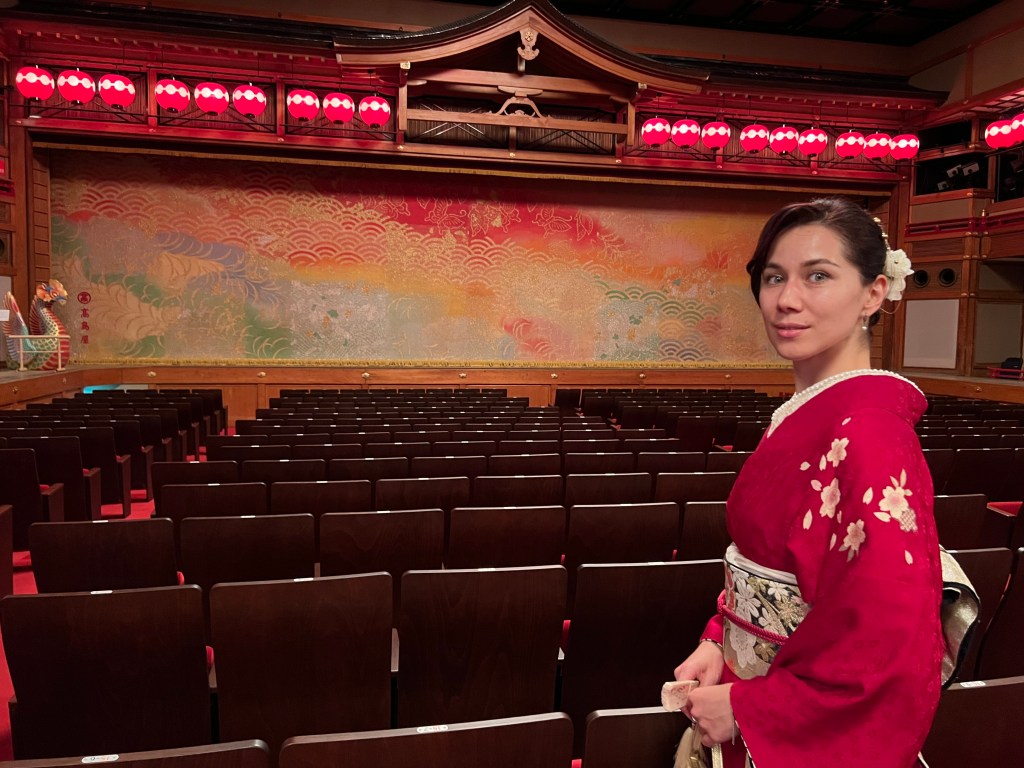
GRATITUDE MOMENT: Today I’m grateful for the flexibility of our group, for being willing to go with the flow and make adjustments in our planned schedule. Our morning allowed us all to see/do something of individual interest and then the afternoon spotting a sign that led us to an unplanned visit to the Geiko Museum.


Visiting the torii gates was a wise choice. Sometimes hubby and I will visit different sites and compare notes. What ever works!
LikeLike
Sometimes when one has limited time in a city, splitting up makes sense. Thankfully Tim and I usually have very similar taste on what we enjoy seeing.
LikeLiked by 1 person
I’m really enjoying seeing some parts of Japan we didn’t get to. That quantity of gates is really stunning.
LikeLike
The gates go on and on, way up the mountain. We only went through a relatively small portion of them, but enough to get a good feel for what they represented.
LikeLike