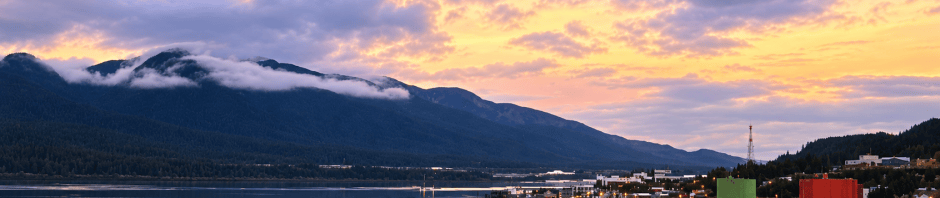
Monday, September 21, 2026
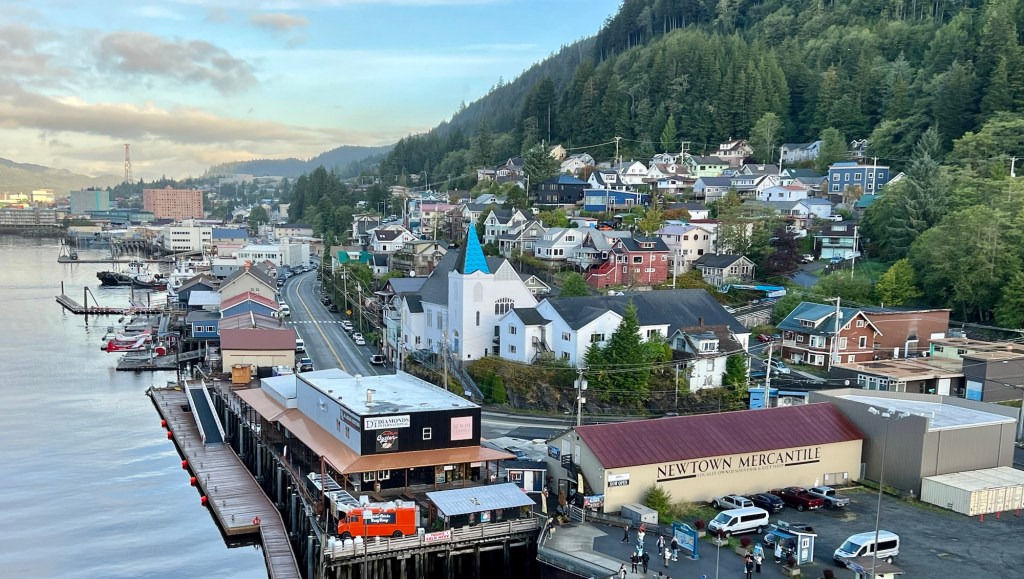
Ketchikan, Alaska is called the “Salmon Capital of the World” and “Alaska’s First City” as well as the “Rain Capital of Alaska”.
It is a colorful waterfront town known for its rich Alaska Native heritage, salmon fishing, and historic totem poles. Set amid lush rainforest along the Inside Passage, it’s famous for historic Creek Street—a charming boardwalk lined with buildings on stilts—and its gold rush days.
This was an early and relatively short stop. Docked at 6:00, but we were not in a huge hurry, so waited until after breakfast and disembarked at 8:00. The town was already bustling with three cruise ships in port.
This was a substitute port for us so we had not booked any shore excursions. Fortunately, the main part of town was an easy 10 minute walk from our berth.
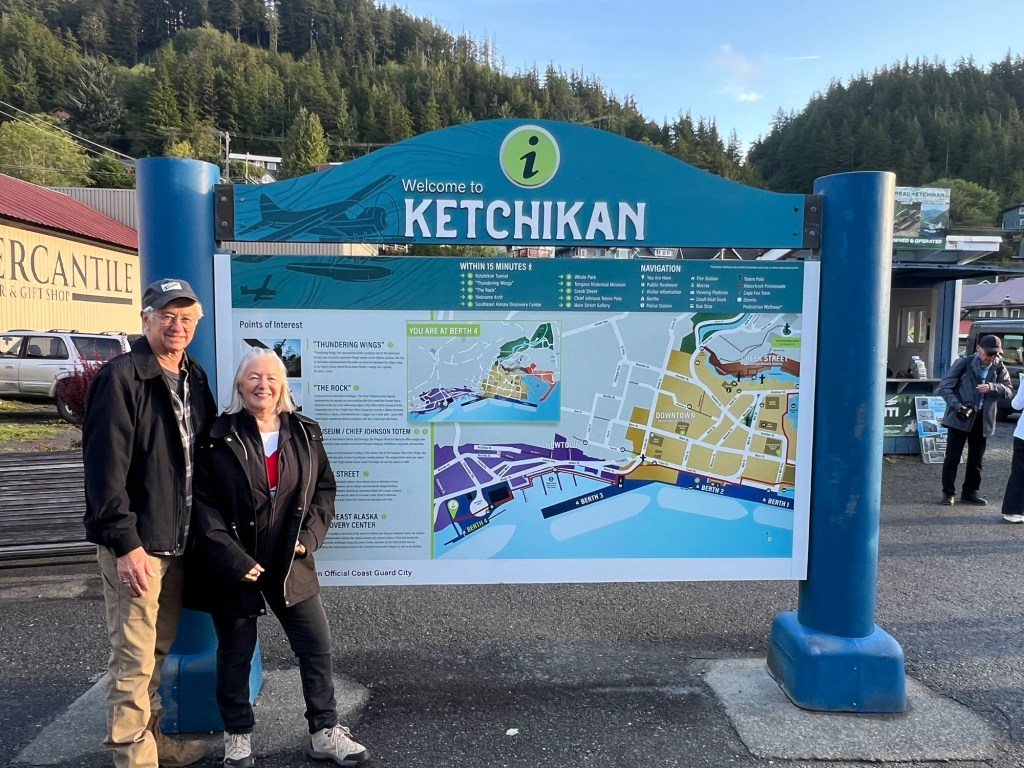
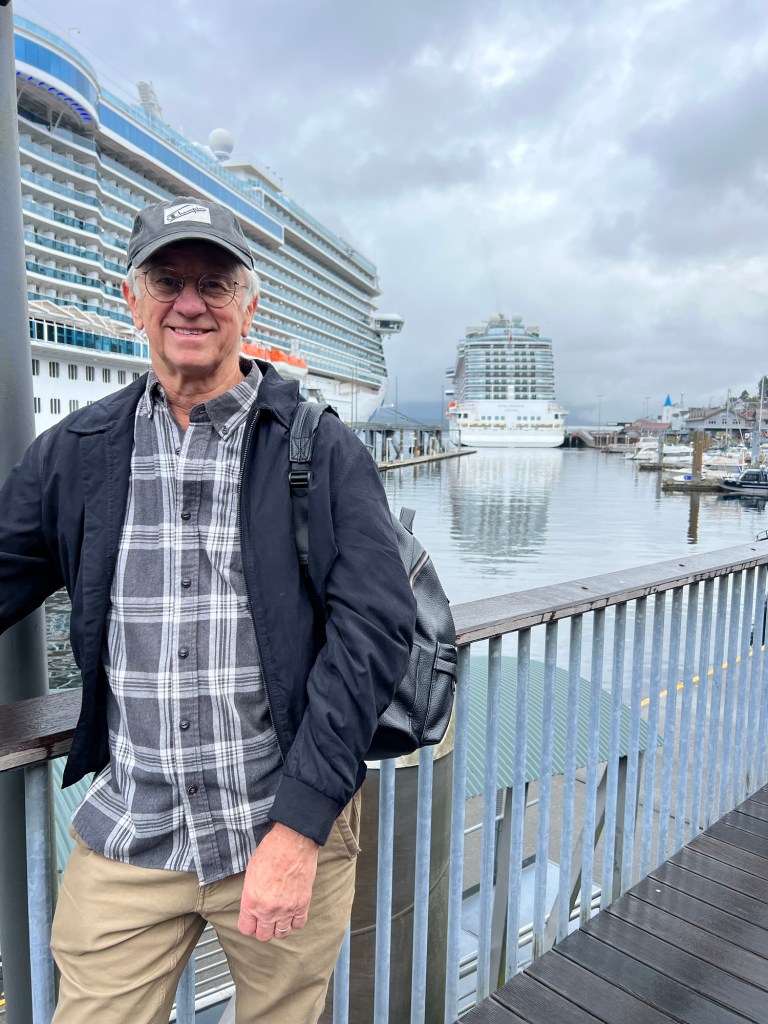
I promised Mark that I’d get our mandatory group photo out of the way quickly. Thankfully they were both good sports about my obsession of taking numerous pictures.
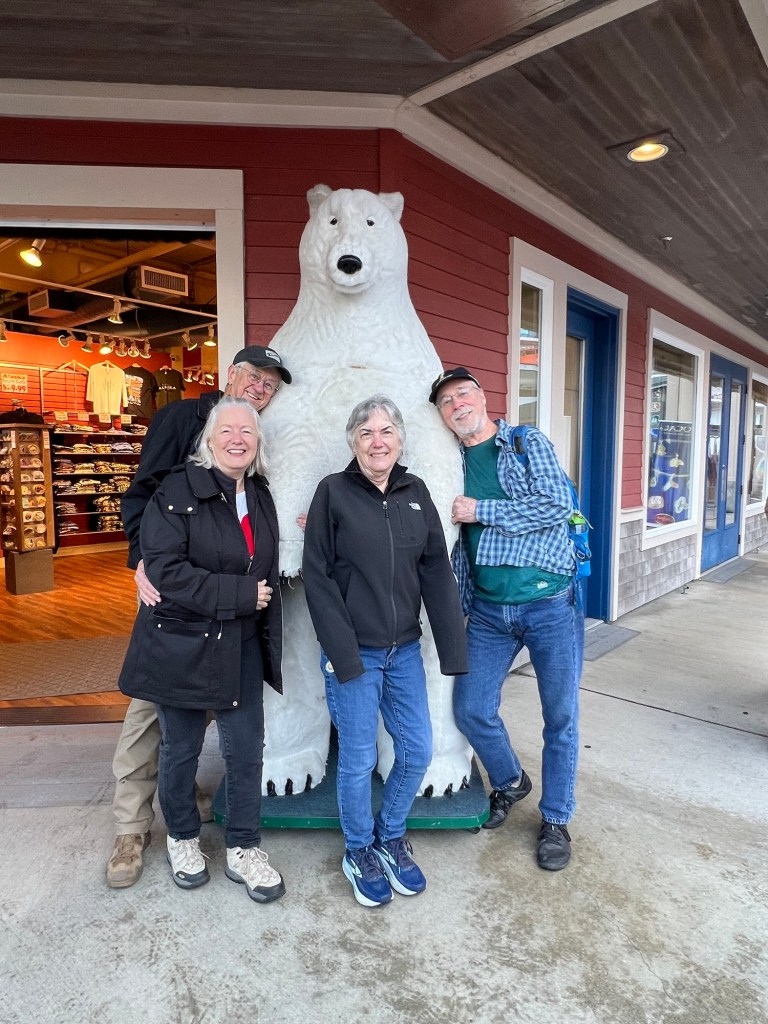
Let’s start off talking about the salmon.
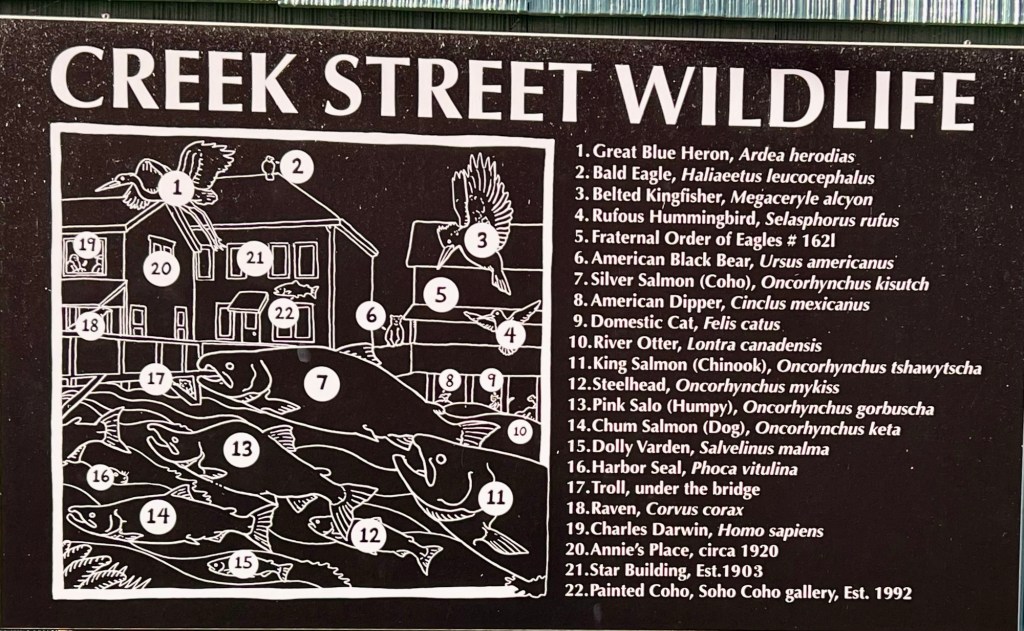
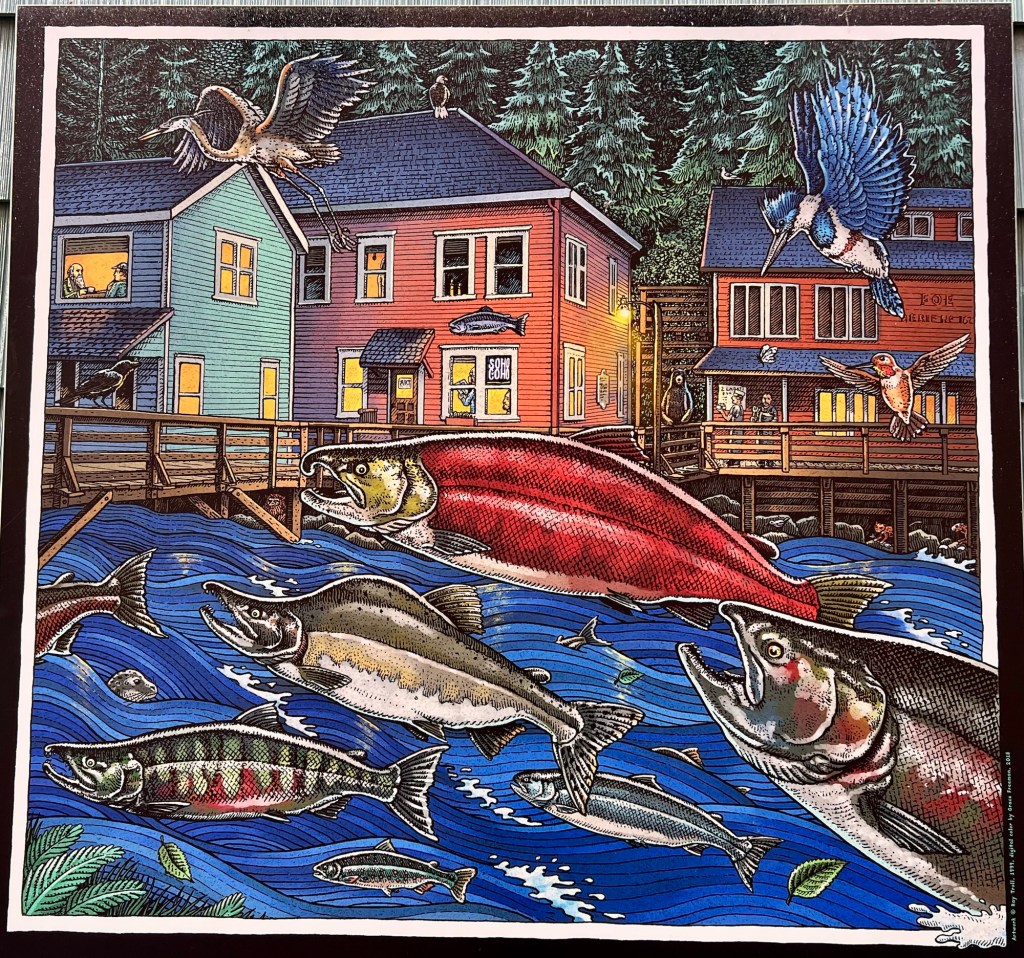
- There is a reason Ketchikan is nicknamed the “Salmon Capital of the World.” Its waters host all five Alaska salmon species: king, sockeye, coho, pink, and chum.
- Their sense of smell guides them home to the stream where they hatched, after years at sea.
- Salmon help feed the forest! They nourish bears and eagles, and their remains supply nutrients to streamside trees.
We were at the tail end of spawning season, but were able to witness hundreds of salmon in the creek that passes through town as they made it to their final destination. Some were still leaping up the creek or the fish ladder to continue further upstream, but many were already completing their life’s mission and laying eggs or fertilizing eggs already deposited.
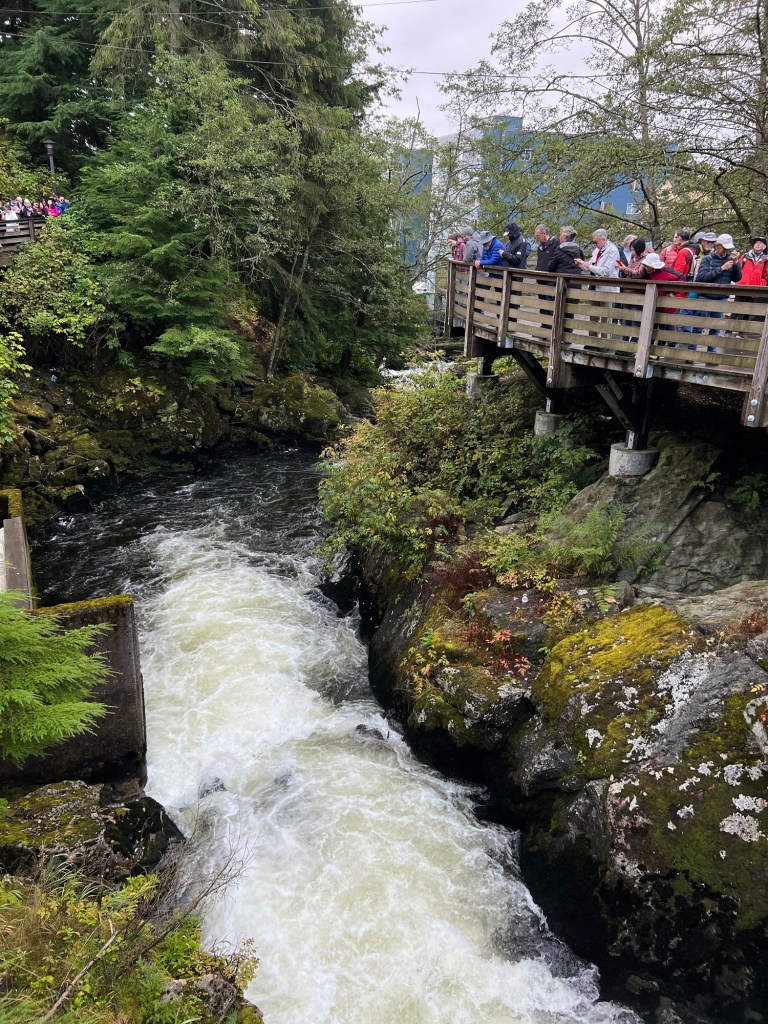
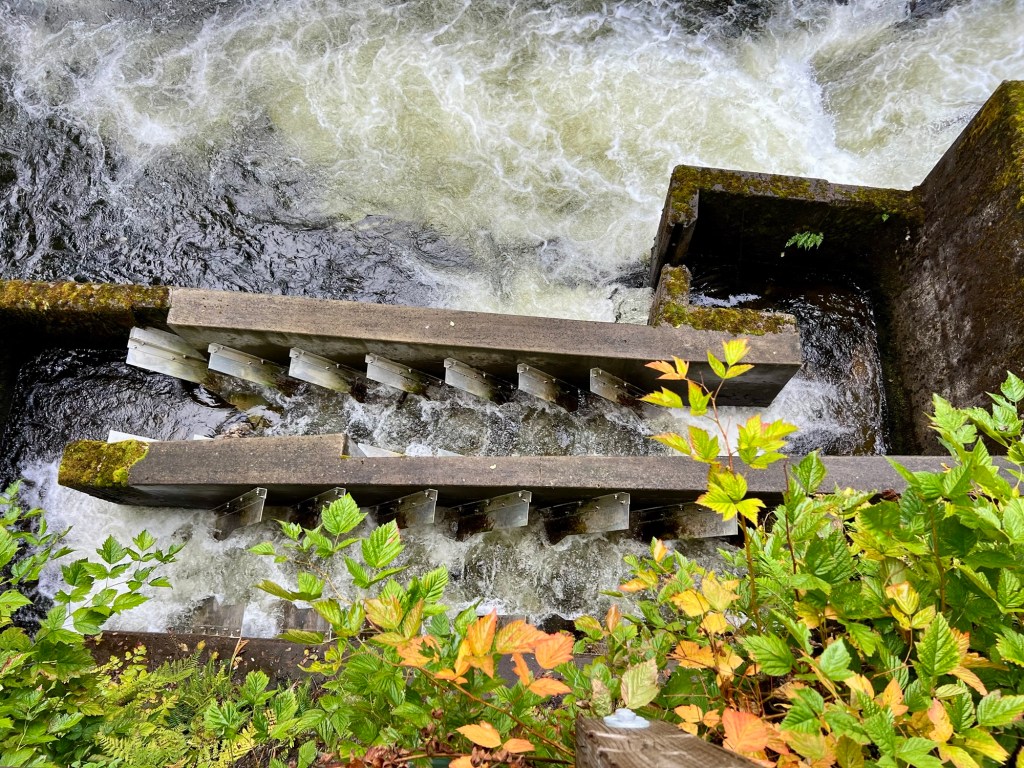
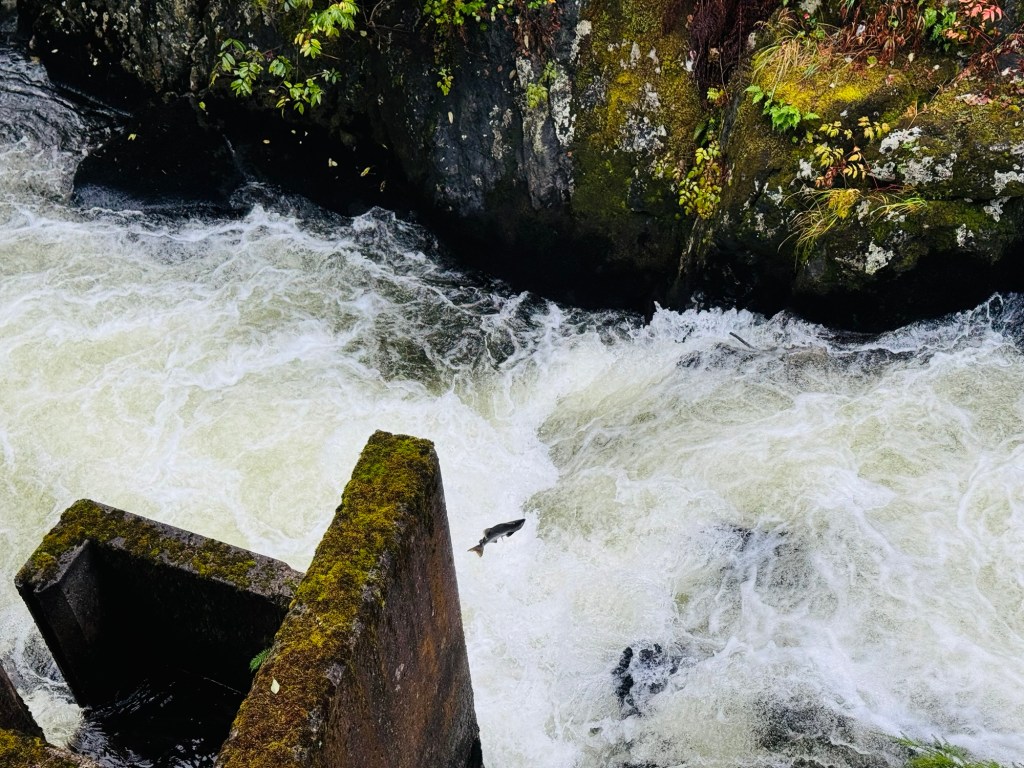
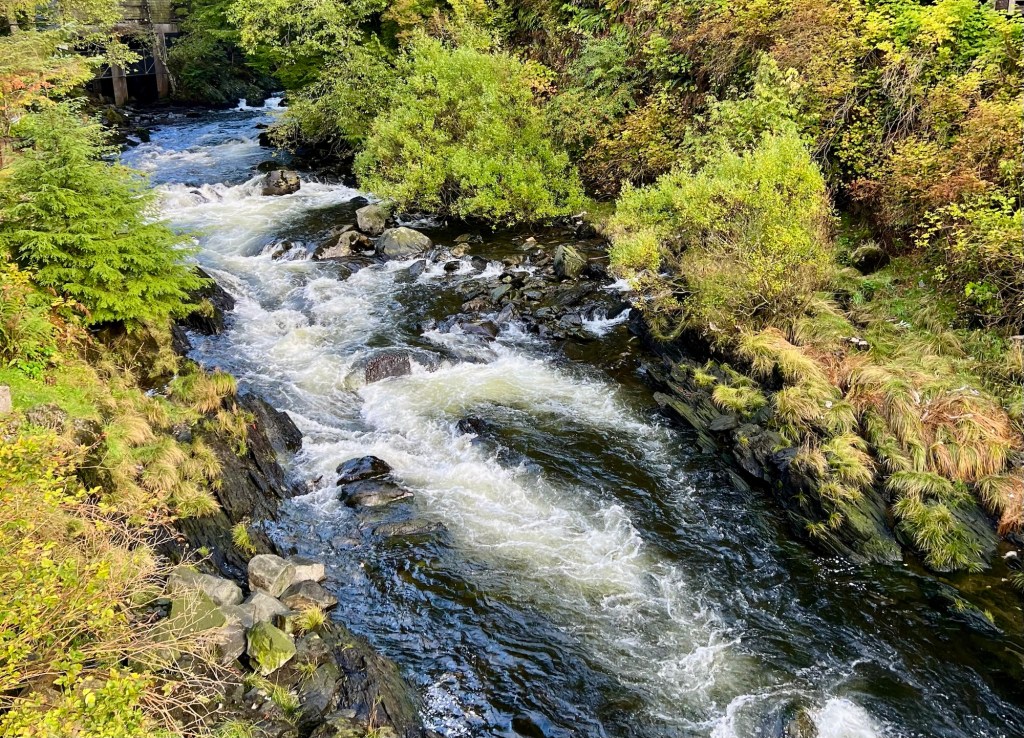
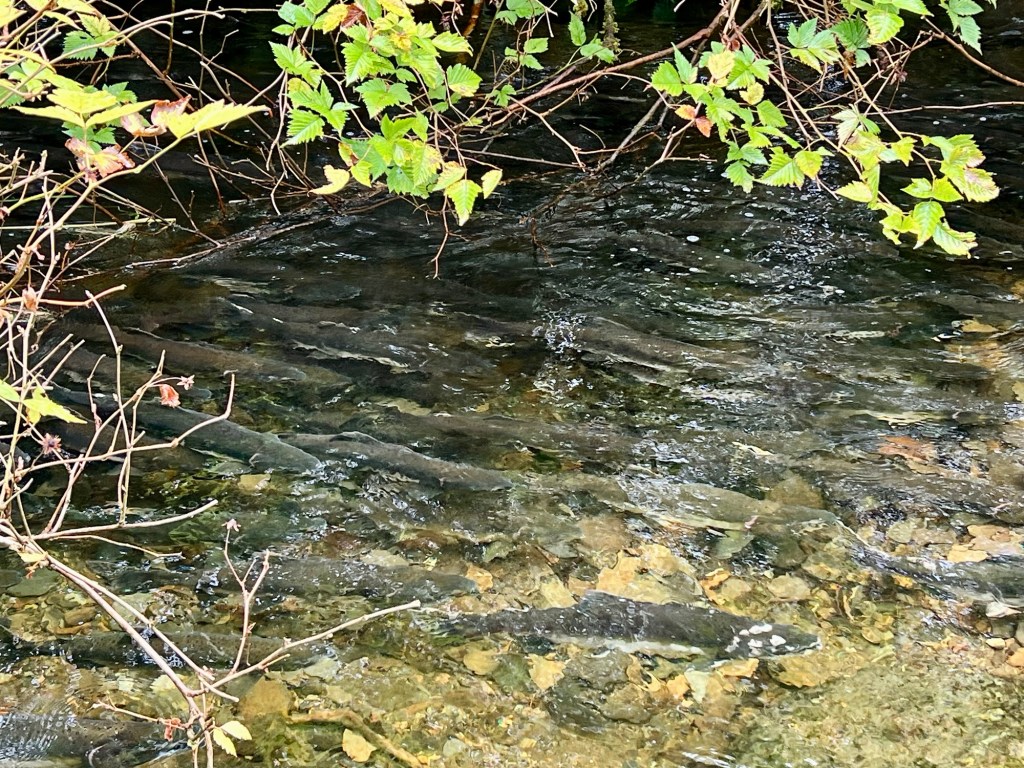
September falls within the region’s salmon spawning season, although timing varies by species and stream. Females dig gravel nests called redds, where they lay eggs that males fertilize. After spawning, these salmon die—a natural end to their remarkable journey. Their bodies nourish the ecosystem while the next generation begins beneath the gravel.
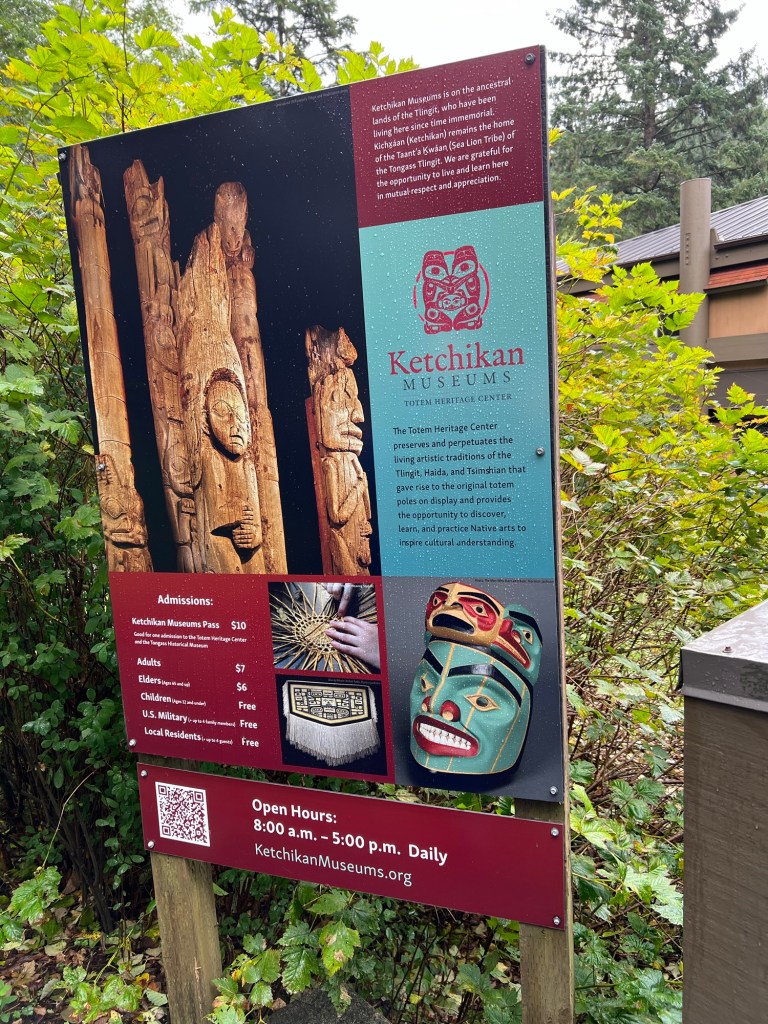
TOTEM POLES: Ketchikan is known for its remarkable collection of totem poles, reflecting the traditions of the Tlingit, Haida, and Tsimshian peoples. Carved mainly from cedar, they honor ancestors, record family histories, and commemorate important events.
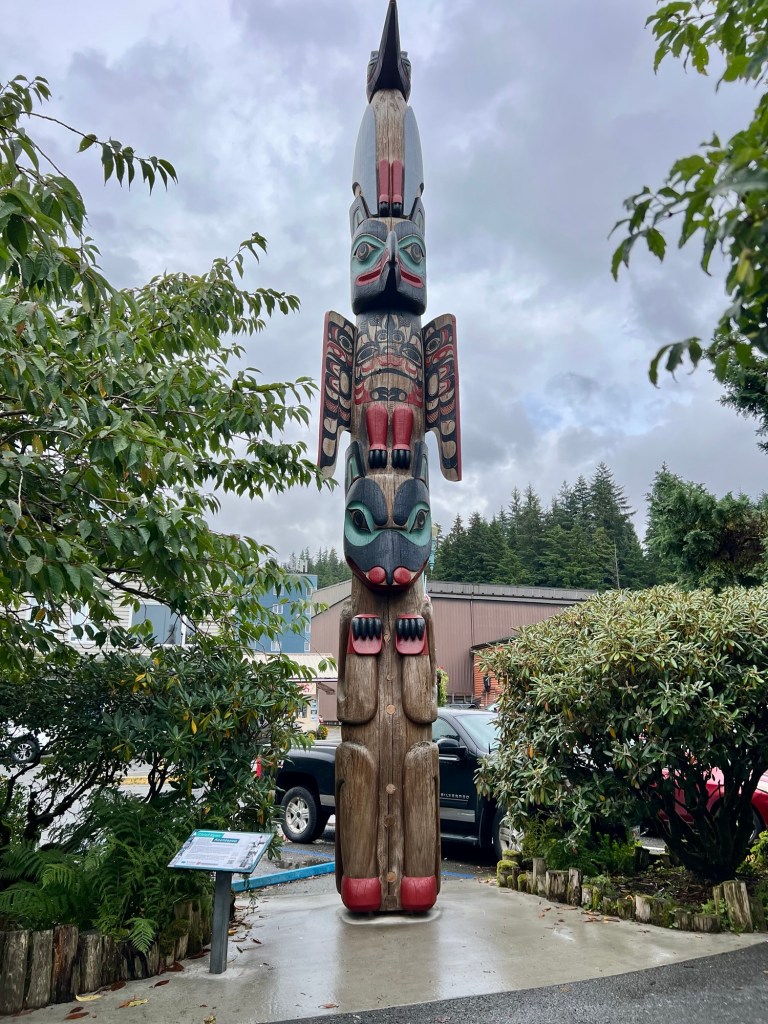
The animals and figures—such as Raven, Eagle, Bear, and Killer Whale—represent clan identities and stories. Totem poles aren’t objects of worship, and a figure’s position doesn’t simply indicate its importance.
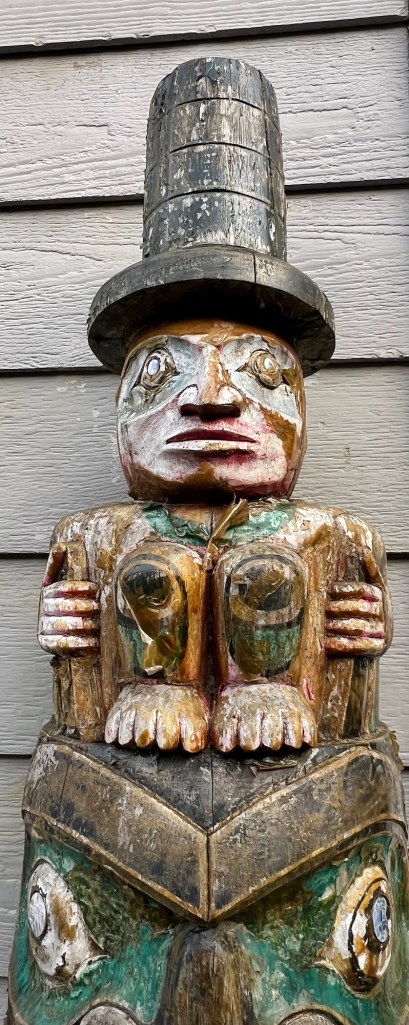
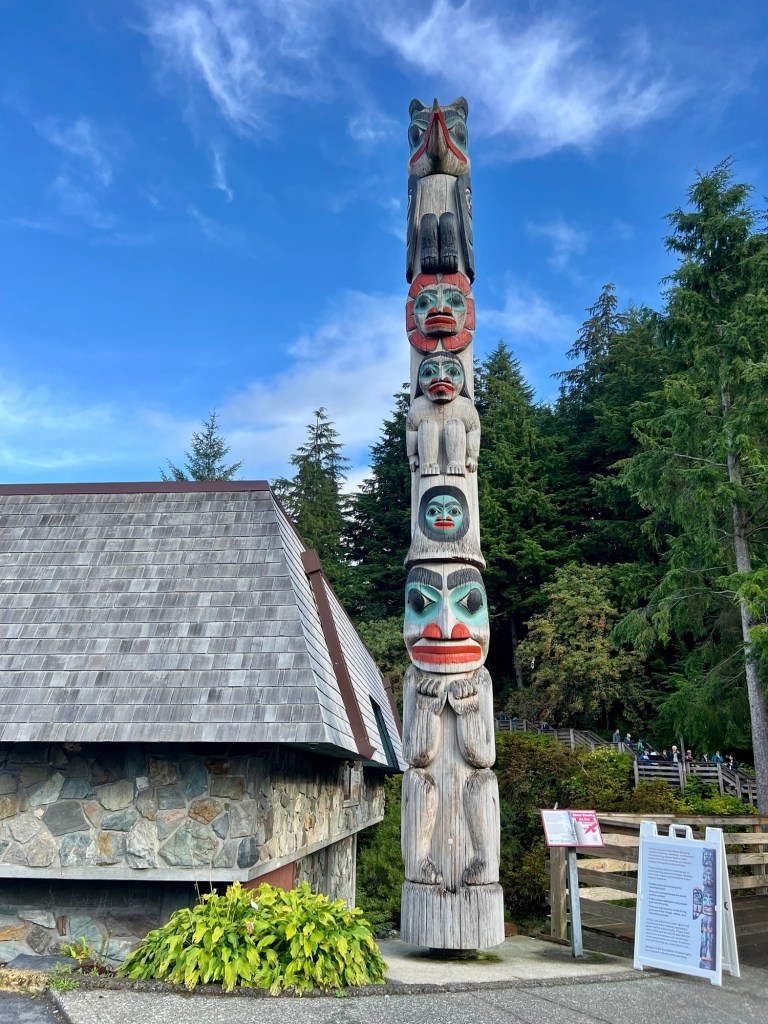
Scattered around town we saw several beautiful, well preserved totem poles. We also visited the Totem Heritage Center where were learned more about the traditions, stories and significance of the different carvings.
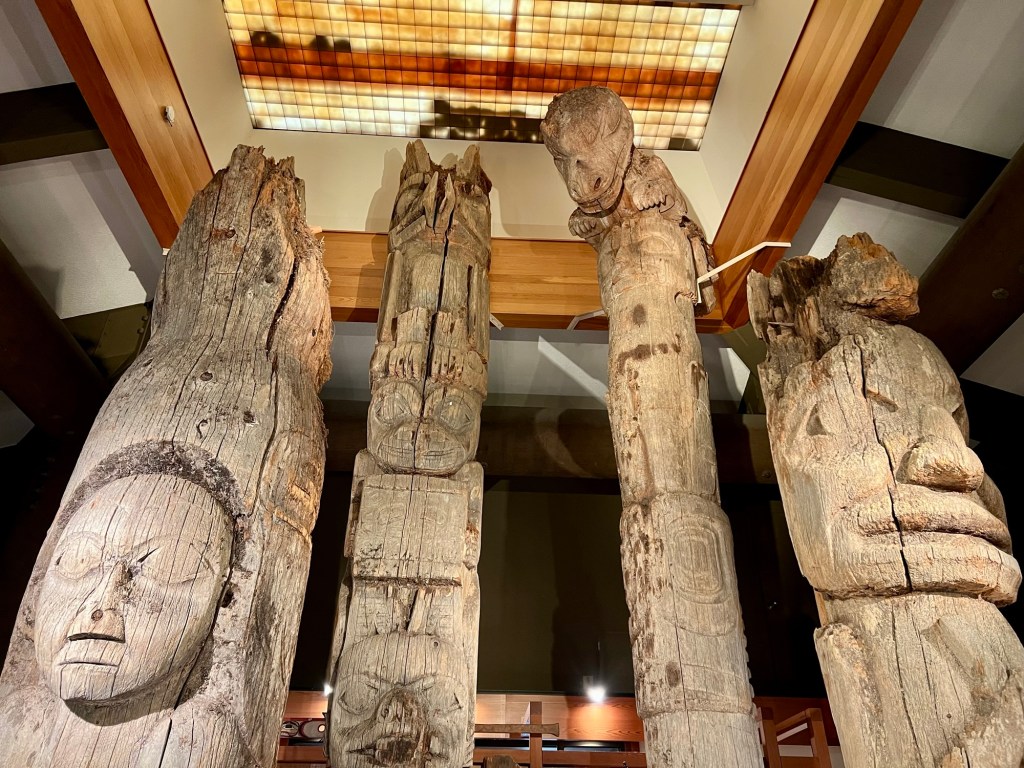
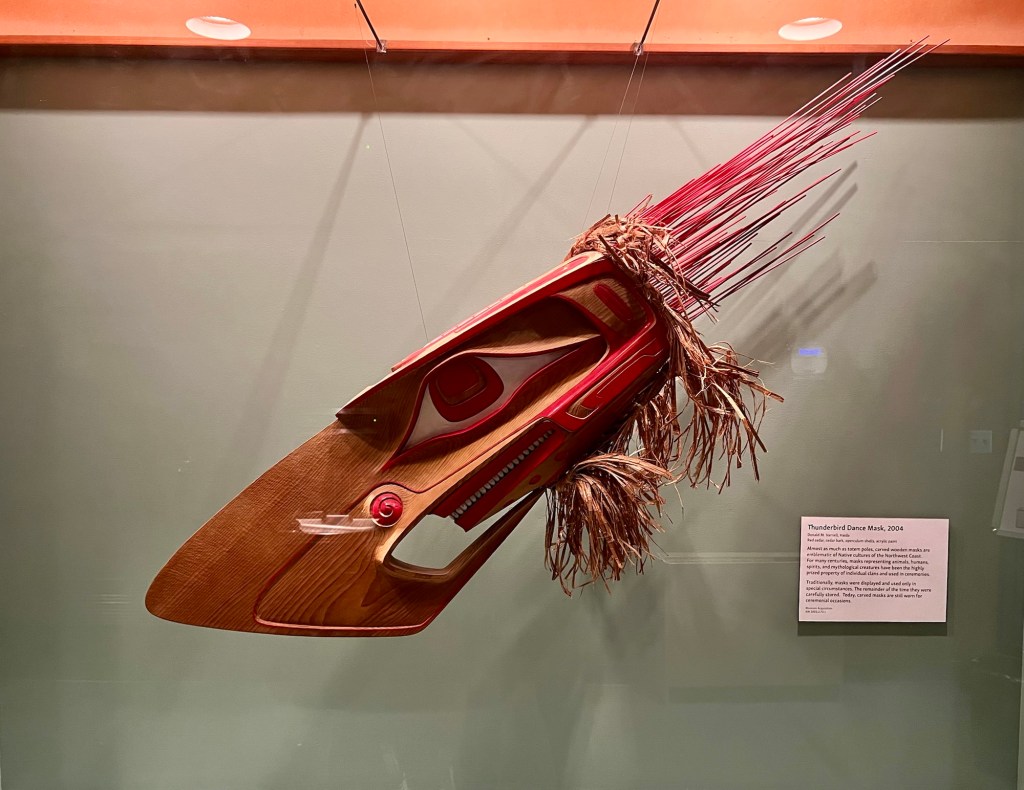
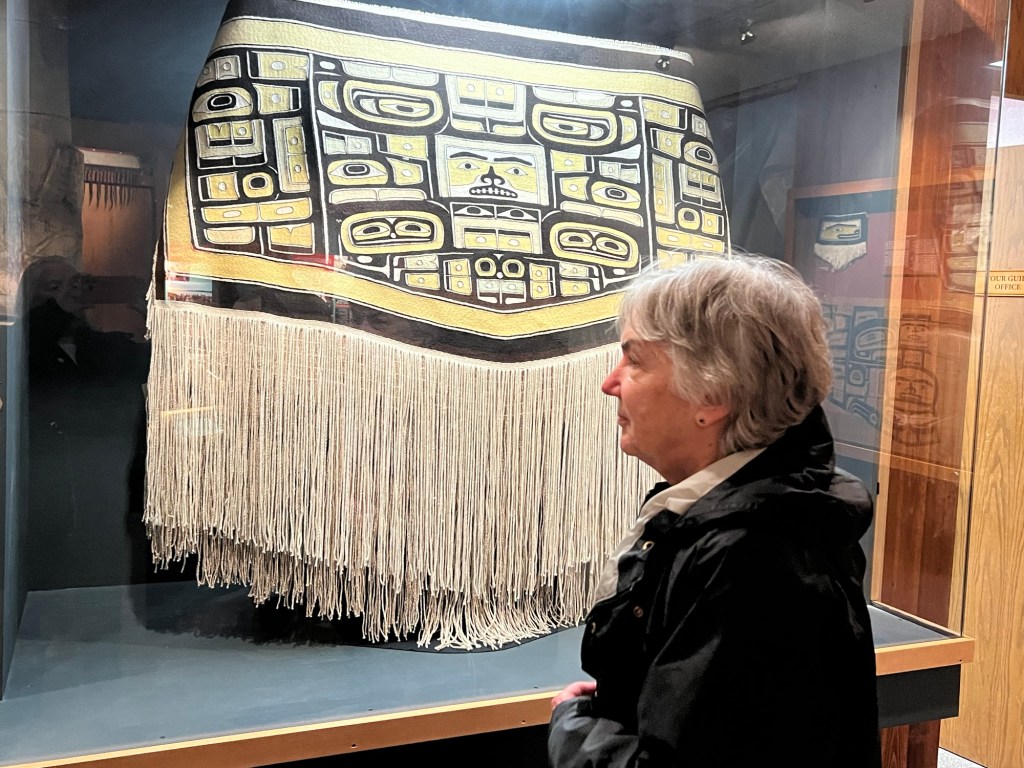
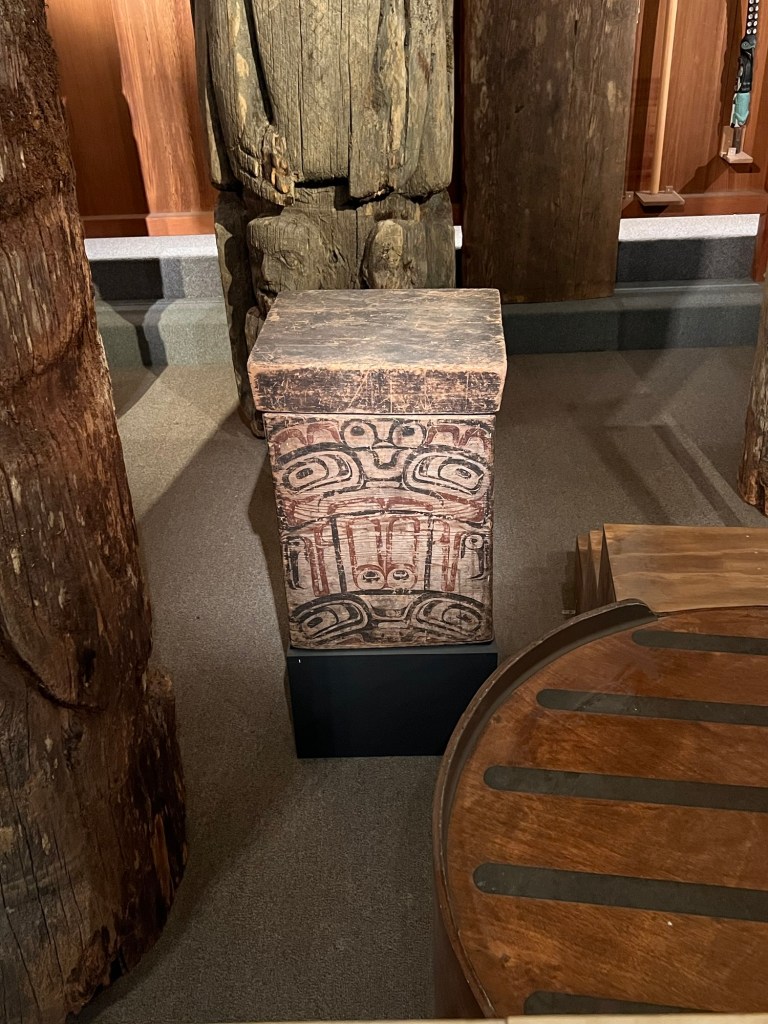
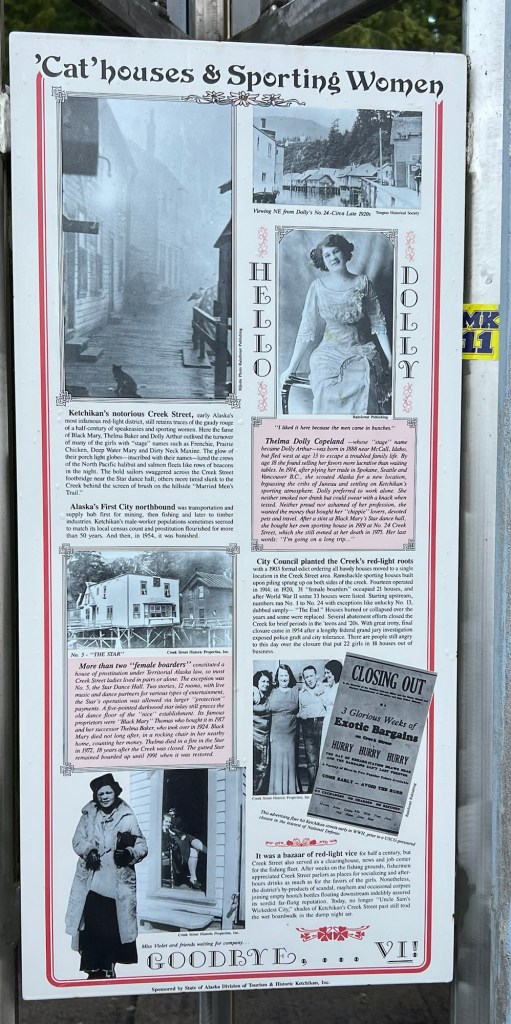
HISTORIC CREEK STREET
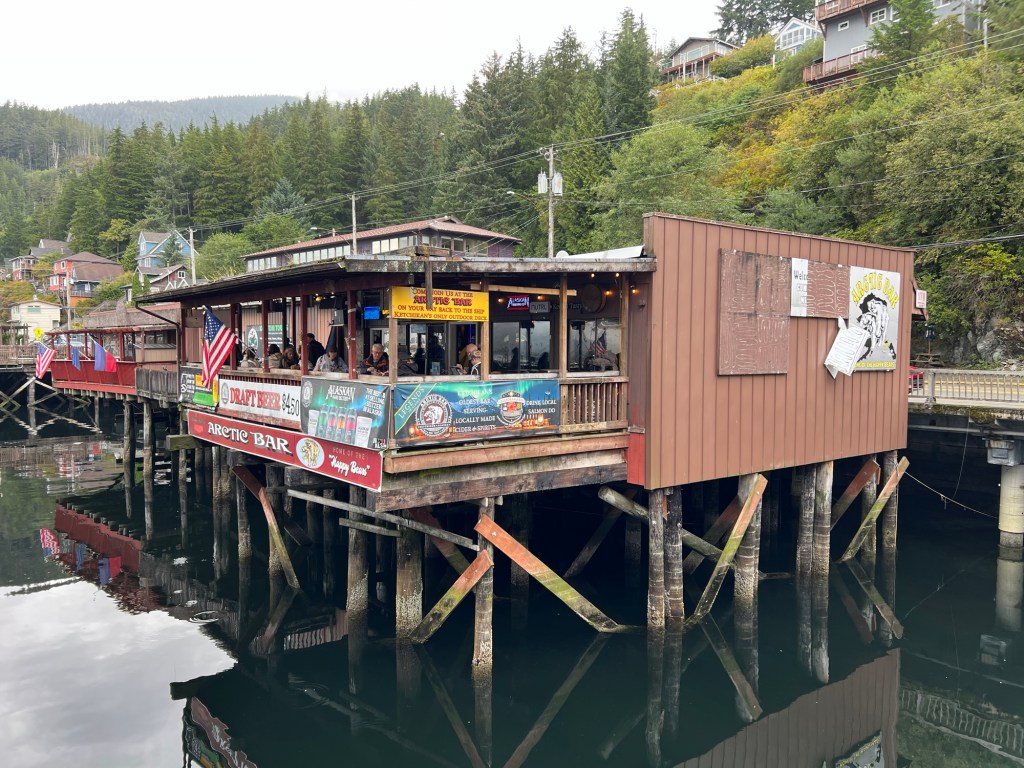
Historic Creek Street is a wooden boardwalk lined with colorful buildings on stilts above Ketchikan Creek. Once the town’s red-light district, it now houses shops, galleries, and Dolly’s House Museum, a former brothel.
Lastly, a few random pictures I took around town.
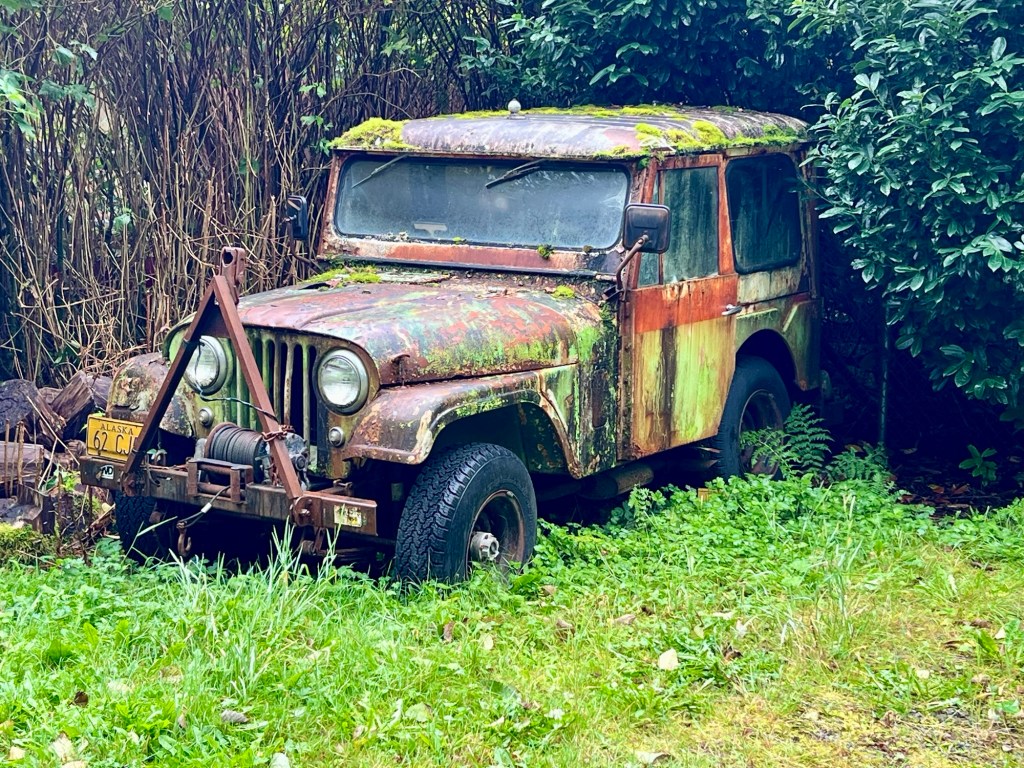
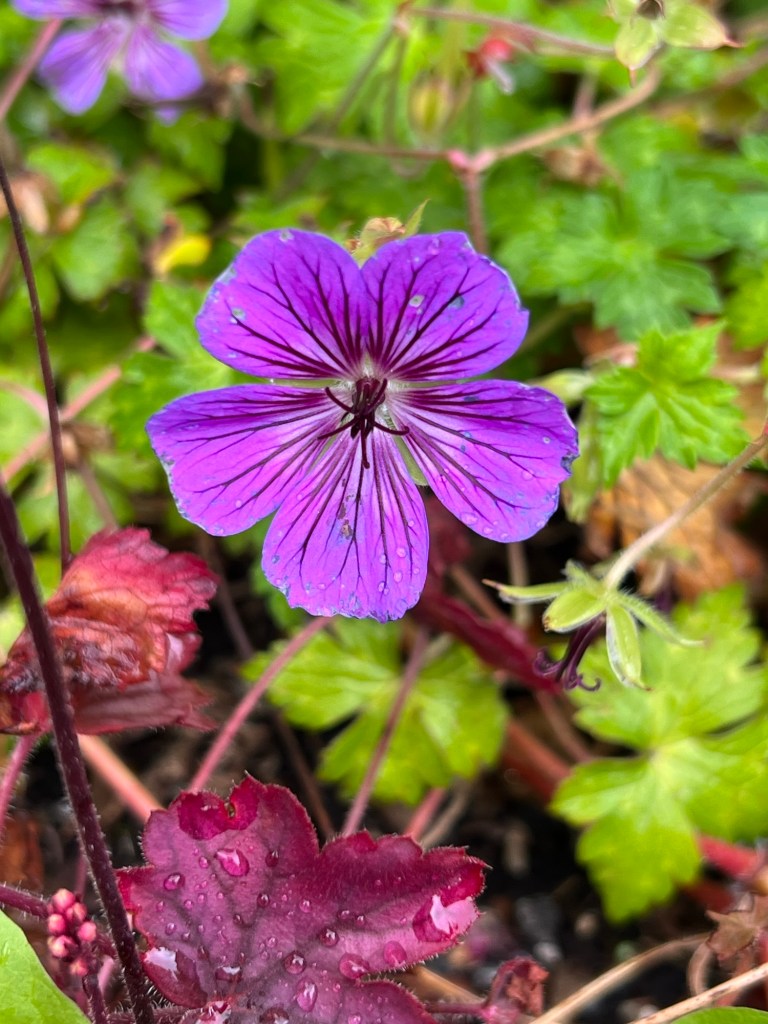
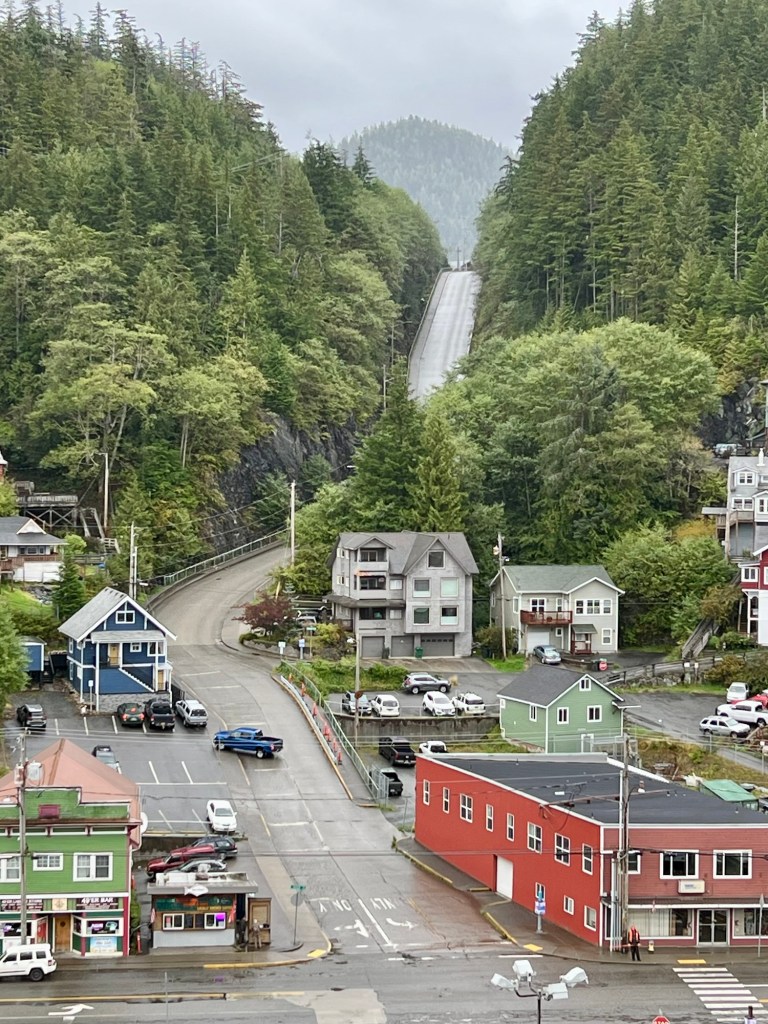
GRATITUDE MOMENT: Today I’m grateful that our weather cooperated. Rain had been forecast, and being in the Rain Capital of Alaska, we were fully expecting to get drenched. Lady Luck had different plans, and other than a few drops, we stayed warm and dry. Once we were back on board, the sky opened up and gave everything a good soaking.


 A Note From Abroad
I’m so glad you enjoyed Ketchikan and saw the salmon running. Those totems are amazing. Thanks for bringing back the awesome memories of our two visits. We have a picture by that same polar bear!!
LikeLiked by 1 person
Sounds like a fun stop! Love Ketchikan (but it does get a lot of rain). 😊It’s ok to panic. If not for you, then for your kids and grandkids. The problem: Climate Change. Extinctions. Habitat loss. Pollution. Population growth! After you panic, Act! Embrace science! Vote! Fight to keep the world livable!
LikeLike